Introduction
A bare excavator can dig. That's about it. Swap the bucket for the right attachment, though, and that same machine breaks concrete, sorts debris, drills post holes, or grades a slope, often within minutes of the swap.
That versatility is why attachments have become standard equipment on modern job sites. Contractors who once struggled with renting or owning three or four specialized machines now run a single excavator through multiple roles instead. It cuts equipment costs, tightens project timelines, and reduces the number of machines competing for space on a tight lot.
This guide breaks down what excavator attachments actually are, the main categories available, and how to pick the right one for your next job. Whether you're grading a driveway or clearing a wooded lot in the Hudson Valley, the right attachment makes all the difference.
Key Takeaways
- One excavator digs, demolishes, handles materials, and landscapes with attachment swaps
- Attachments span four categories: earthmoving, demolition, material handling, and landscaping/utility
- Compatibility hinges on weight class, hydraulic flow, and coupler type, not popularity
- Renting specialized attachments often beats buying for occasional jobs
What Are Excavator Attachments and Why They Matter
Excavator attachments are interchangeable tools mounted to the machine's arm, either with direct pins or a quick coupler, in place of or alongside the standard bucket. They're what turn a digging machine into a breaker, a grapple, or a grader without changing the excavator itself.
That interchangeability is the whole point. One carrier, several jobs. A crew that would otherwise need a separate skid steer, breaker rig, and material handler can instead swap tools on a single excavator and keep moving.
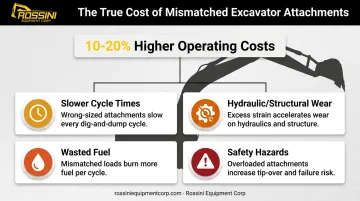
The upside is real, but so is the risk of getting it wrong. Caterpillar notes that choosing the wrong bucket for the job can increase operating costs by 10% to 20%. Those costs show up in familiar ways:
- Slower cycle times that eat into productive hours
- Added wear on the carrier's hydraulics and structure
- Wasted fuel from inefficient digging patterns
- Safety hazards that put crews and equipment at risk
Mismatched attachments don't just underperform. They compound problems across the entire job site.
Sullivan County crews see this play out on a regular basis. Bucket digging simply doesn't work on solid rock. Areas like Thompsonville, Neversink, and the Catskill ridge are known for bedrock close to the surface.
Without a hydraulic breaker on hand to fracture it first, the job stops cold. That's not a minor inconvenience. It's a lost rental day and a stalled schedule.
Mixed, layered ground compounds the problem. A single hole might include:
- Workable topsoil at the surface
- Clay starting around 2 feet down
- Solid rock by the 5-foot mark
That variability is exactly why having the right attachment ready before the machine gets to site matters more than most people expect.
Types of Excavator Attachments
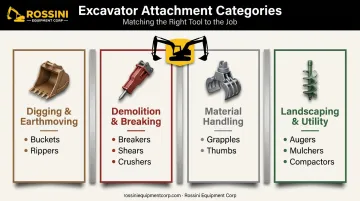
Excavator attachments aren't interchangeable in the sense of "any tool works for any job." They're grouped by the kind of work they're built to do, from moving earth to breaking concrete to gripping irregular loads. Understanding these categories helps crews match the right tool to the task instead of guessing.
Digging and Earthmoving Attachments
These are the workhorses of any excavation job. They stay in direct contact with the ground and move material rather than crush or lift it.
- General-purpose buckets: handle trenching, grading, and backfilling across varied soil types
- Heavy-duty buckets: built for dense, abrasive material like hard-packed ground and gravel
- Rock buckets: reinforced for aggressive loading in highly abrasive rock conditions
- Ditch-cleaning buckets: shape slopes and maintain ditches with a wider profile
- Rippers: score and break up frozen or rocky ground with a single steel shank before a bucket can dig it
Rippers deserve a specific mention since they're often misunderstood. A ripper attachment isn't for excavating; it's a pre-dig tool that scores hard or frozen ground so a bucket can follow behind it. On Hudson Valley sites during late fall and winter, that sequencing saves real time.
Limitation: none of these tools are built for demolition debris or delicate material handling. Trying to use a bucket where a grapple belongs usually ends in a slower, messier job.
Demolition and Breaking Attachments
That's the gap demolition and breaking attachments fill. This category relies on impact and crushing force, not digging motion.
- Hydraulic breakers/hammers: deliver repeated percussive force for concrete removal, trenching in rock, and secondary breaking
- Shears: cut through structural steel and rebar with high-force jaws during demolition and recycling
- Crushers/pulverizers: reduce concrete into manageable pieces and separate embedded rebar
Hydraulic demand varies widely by model, so there's no universal spec here. As one example, Epiroc's SB 52 breaker runs on carriers between 0.7 and 1.1 tons at 12 to 27 liters per minute of oil flow, while larger pulverizers demand far more flow and pressure. Always check the manufacturer's compatibility chart for the specific tool.
Limitation: breakers and shears put heavy demand on the excavator's hydraulic system and aren't suited for fine grading or soil work.
Material Handling Attachments
Once debris is broken apart, it still needs to be gathered and moved. Grapples and thumbs are built to grip and hold, not dig or break.
- Grapples: sort and lift irregular loads like logs, scrap, and demolition debris
- Thumbs: grip awkward material alongside the bucket using a hydraulic or fixed opposing member
These tools shine on land-clearing sites, demolition cleanup, and scrap sorting, where a bucket alone would let material slip or spill.
Limitation: they're not built for direct excavation or breaking. A grapple can move a pile of debris efficiently, but it won't dig the trench underneath it.
Landscaping and Utility Attachments
Once the heavy work wraps up, projects shift toward finishing touches. This category covers finishing and prep work rather than heavy digging.
- Augers: drill post holes, footings, and planting holes
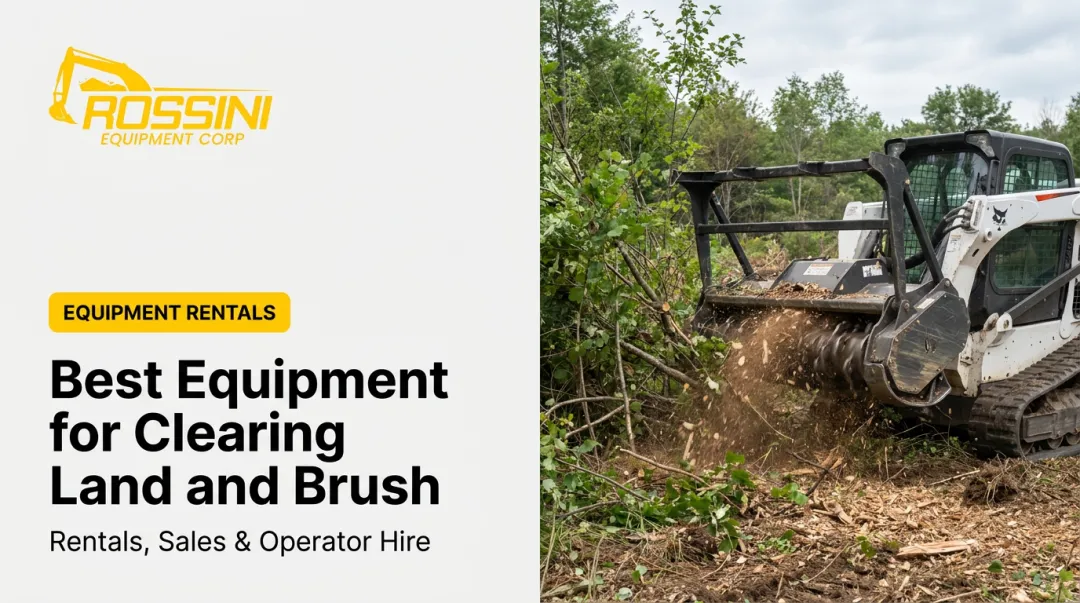
- Mulchers: cut and process standing vegetation, useful for clearing wooded lots
- Compactor plates: compact soil, sand, or gravel ahead of concrete or asphalt work
- Brush cutters: clear brush and small trees faster than manual crews
Limitation: most of these tools serve a narrow phase of the project. A crew rarely needs an auger full-time, which is exactly why rental fits so well here.
How to Choose the Right Excavator Attachment
The right attachment depends on the excavator's specs and the job in front of you, not what happens to be sitting in a rental yard.
Factors That Determine the Right Fit
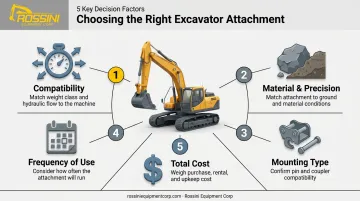
- Compatibility: Match the attachment to the excavator's weight class and hydraulic flow rate. An undersized carrier paired with a heavy breaker leads to overheating and premature wear.
- Material and precision: Soil, rock, concrete, and vegetation each call for a different tool, and some tasks need finesse more than force.
- Mounting type: Pinned attachments connect directly to the linkage, while a quick coupler lets crews switch tools without leaving the cab.
- Frequency of use: A tool needed for one project phase is usually a better rental candidate than a purchase.
- Total cost: Weigh upfront price against long-term maintenance, storage, and downtime risk.
Pinned vs. Quick Coupler
| Factor | Direct Pin-On | Quick Coupler |
|---|---|---|
| Change speed | Requires manual pinning, slower | Changes possible in seconds without leaving the cab |
| Added weight/geometry | None | Slight added mass, can affect breakout force |
| Safety consideration | Standard pin retention practices apply | Requires positive locking and regular inspection |
Quick couplers speed things up considerably, but that speed comes with a real safety responsibility. OSHA has documented 15 unintended-release incidents and eight fatalities tied to couplers that weren't properly locked or inspected. Whichever mounting style your fleet uses, inspection before every attachment change isn't optional.
Ground conditions matter just as much as machine specs when narrowing down the right attachment. Rocky subsurface calls for a breaker on standby. Heavy clay pockets need a full-size machine and a clay bucket rather than an underpowered mini excavator. Tight wooded lots often favor a compact-radius machine paired with a brush cutter or grapple.
Working with a rental partner who knows the terrain, whether that's rock ledge near the Catskills or clay-heavy sites after spring rain, helps get the pairing right before the machine ever leaves the yard.
Renting vs. Buying Excavator Attachments
Buying makes sense for attachments used on nearly every job, like a general-purpose bucket. For anything more specialized, such as breakers, mulchers, or crushers, renting is usually the more practical call.
Why renting wins for occasional use:
- Avoids the upfront capital cost of a tool used a handful of times a year
- Skips the storage and maintenance burden that comes with ownership
- Gives crews access to well-maintained, current equipment without a long-term commitment
Rossini Equipment Corp, serving Sullivan County and the greater Hudson Valley, offers daily, weekly, and monthly rental terms on attachments, along with in-house delivery and on-site servicing. That combination matters more than it sounds.
A crew that needs a hydraulic breaker for a three-day rock removal job doesn't need to own one, store it, or maintain it afterward. They need it on site, ready to work, and picked back up when the job's done.
For crews juggling multiple project phases, that flexibility, plus a rental partner who already knows the region's rock ledge and clay conditions, cuts out a lot of the guesswork before it becomes a problem.
Conclusion
Excavator attachments turn one machine into several, covering digging, demolition, and material handling without adding equipment to the fleet. Each category, from buckets and rippers to breakers and augers, exists to solve a specific jobsite problem, and matching the tool to both the task and the carrier is what drives productivity.
Getting that pairing right the first time means fewer stalled rental days, less strain on the machine, and a safer site overall. That's why Rossini Equipment Corp keeps matched excavators and attachments ready to rent across Sullivan County and the Hudson Valley.
Frequently Asked Questions
What are the different types of excavator buckets?
The main types are general-purpose, heavy-duty, rock, ditch-cleaning, and severe-duty buckets. The right choice depends on soil type, abrasiveness, and digging depth.
What are some common types of excavator attachments?
Common categories include buckets, hydraulic breakers/hammers, grapples, augers, thumbs, and compactor plates, each built for a different type of work.
What is a ripper attachment used for?
A ripper uses a single sharp tooth to break up hard, rocky, or frozen ground before excavation, making it easier for a bucket to dig afterward.
How do I know which attachment fits my excavator?
Compatibility depends on the excavator's weight class, hydraulic flow rate, and pin or coupler type. Confirm these specs with your equipment supplier before booking.
Is it better to rent or buy excavator attachments?
Renting suits occasional or specialized tasks like breaking or mulching, while buying makes more sense for attachments used on nearly every job.
Do I need a quick coupler to switch attachments?
A quick coupler isn't mandatory, but it speeds up attachment changes since operators can switch tools without leaving the cab. This matters most on multi-task jobs where every extra minute counts.